



**We’ve updated the locations to point you exactly at the locations they used and added a few other locations beyond episode 1**
No, because let’s talk about how unhinged this was in the best possible way.
I sat down to watch Can This Love Be Translated? like a normal, functioning adult. No expectations. No plans. Just vibes. And then Episode 1 happened.
Not the whole series. Not a dramatic arc. Just the first episode.
Somewhere between the opening scenes and the end credits, my brain quietly shifted from watching to scheming and screaming! You know the feeling. The kind where you’re still technically seated on the couch, but mentally you’re already outside, shoes on, phone in hand, zooming into Google Maps.
That’s the energy this article is written in.
And here’s the best part: this isn’t just a fan thing. It’s actually a fantastic day tour for anyone wanting to explore Enoshima and Kamakura, whether you’re a fan or just someone who loves a fun, light day out with sightseeing, local vibes, and cute photo ops.
If you want to see other locations in Kamakura and Enoshima, check out our experiences below.
You might want to read:
I was excited about Kim Seon Ho getting into places I’ve also visited!
Episode 1 of Can This Love Be Translated? said, “Cool, but what if we also made you want to leave your house?”
The Kamakura–Enoshima scenes on episode 1 don’t demand attention. They’re not flashy. They don’t scream tourism board. They just exist naturally in the story—which is exactly why they work.
Your brain registers them quietly at first. The background feels calm. Walkable. Real. Then, a few scenes later, you realize something dangerous: none of this feels impossible to visit.
That’s when the internal dialogue starts: That train shot feels specific.
That crossing looks familiar.
That angle doesn’t look like a set at all.
And suddenly, the episode stops being passive entertainment. It becomes an invitation.
Didn’t Plan to Find the Filming Places in Japan (But Curiosity Won)
Let’s be clear—I didn’t start this with a master plan.
It began as casual curiosity. A pause here. A rewind there. A screenshot saved “just in case.” Then the screenshots started piling up.
I compared angles. Looked at fences, street layouts, train tracks. We did the very universal, very human thing of saying, “Okay but what if we actually tried to find this?”
That’s when it crossed the line from curiosity to mission.
Finding the Episode 1 spots didn’t feel like detective work—it felt like a game. One where the reward wasn’t proof, but recognition. That split second when you stand somewhere and your brain goes, Oh. This is it.
And yes—we found them.
We’ve been to Kamakura and Enoshima a couple of times before and well that was the trigger of the great flood of adrenaline when we saw familiar places! We might write a few other place around Enoshima and Kamakura in upcoming articles, but for now here we go with the shooting locations!
Shooting Locations of “Can This Love Be Translated”
I’ll include my recommended order of visiting them on the latter part of this article to make sure you’ll get a good use of your pass while checking out these places. But here they are:
1. Gokurakuji Station
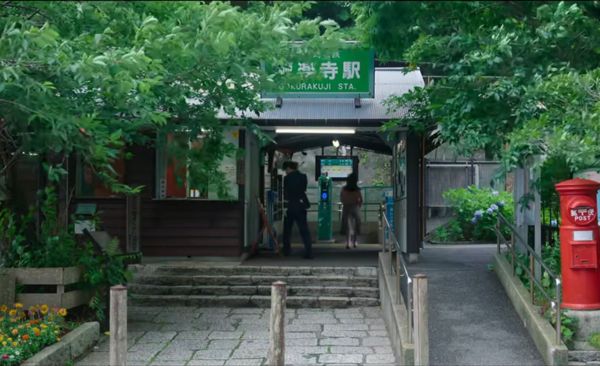
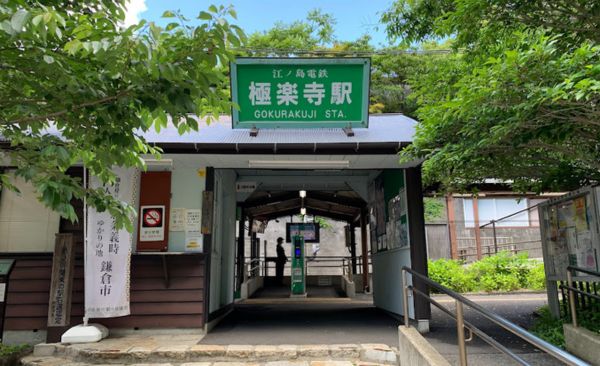
This was the scene where Ho-jin got his pamphlets in different languages and mentioned to the staff that they seem to have run out of Korean ones.
This is Gokurakuji Station which is one of the stop overs when you take the Enoden Line.
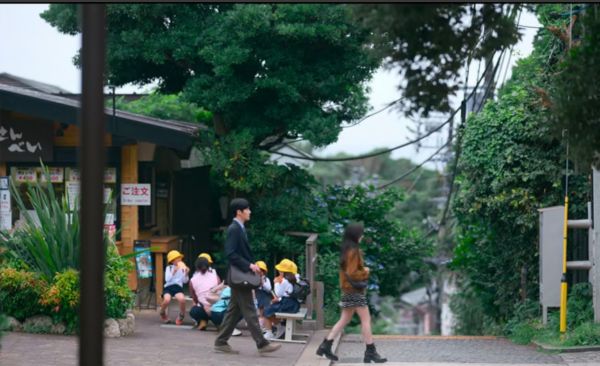
2. Street Near Minshuku Ryokan Shigesuke/ Tenzan Lab
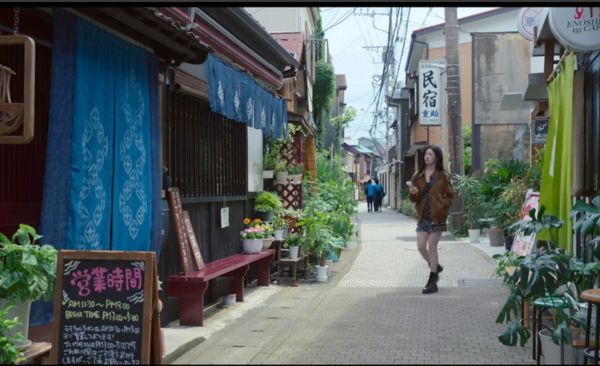
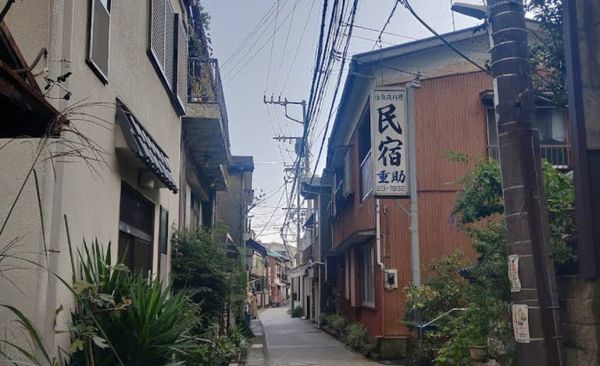
Now you might not find this cafe on Google Map, but this one’s on Tabelog (the food app used by Japan locals).
To find this street on Google Map just type: Minshuku Ryokan Shigesuke
Not sure if the restaurant on the series is a real one (the one with the blue curtain on the left shot is Tenzan Lab but is currently on the map as temporarily closed) but it would be quite an experience to get on this back alley where they shot a number of frames!
Now getting here is straightforward if you’re using Google Maps, but to be honest this is quite a long walk from the stations (whether you took the Enoden Line or the Shonan Monorail).
If you don’t plan on taking the trains, I suggest that you take the N3 bus from Ofuna (just outside Ofuna Bus Station) since you’ll be dropped off just a few minutes from this street.
3. A bird’s eye view from Enoshima Shrine Hetsumiya
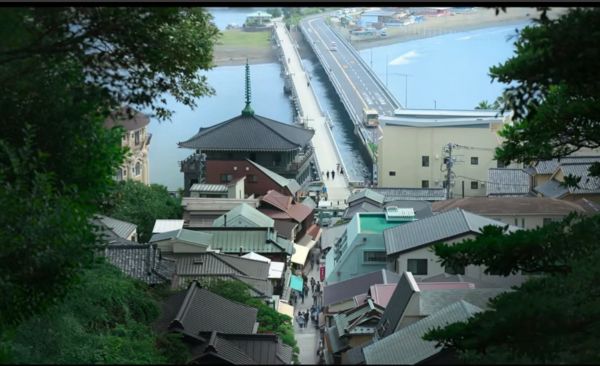
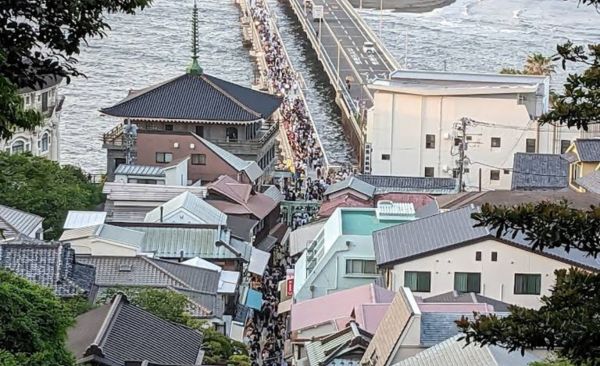
On weekends and holidays, there is great foot traffic towards this shrine. I think the least crowded time we’ve visited before was a weekday mid February. If you’ve seen this view and it’s likely that you’ve seen the busy alley going here.
I remember the first time we went here, we were so discouraged because we saw the flight of steps going to the shrine, not knowing that there was an easier way going there (although still a flight of stairs, but less steep and had more shops and views).
4. Asahi Honten (near Yuhi Chaya, not on Enoshima Benzaiten Shopping Street)
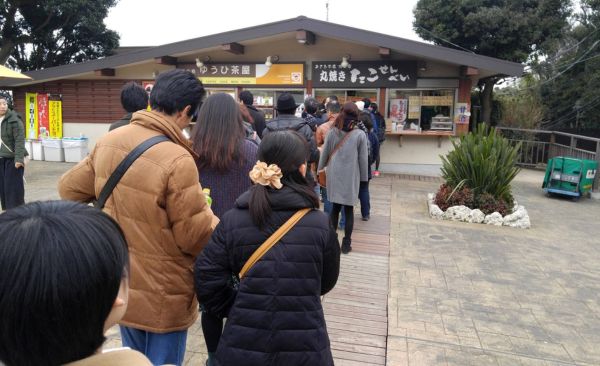
Well after the restaurant confrontation and the donning of the “universal language” this scene comes next where they parted ways.
This one is at Asahi Honten where you can get some snacks. There is also a small space there where there are occasional street performances. Now going here means you’ve taken the stairs, or the elevator to the Enoshima Candle!
When you put this on Google Map you may find that it also points to another Asahi Honten (at the lower area) but if you really want to find this area you can also type “Yuhi Chaya”. I confirmed this because when you rewatch the series you may find a signage on the background of Mu Hee saying “Two Mountains” and this Asahi Honten is very much a few steps away from that area, unlike the one at the shopping street.
You might appreciate the snack shops along the way because, when I say stairs, it really has a lot of it!
5. Goryo Shrine
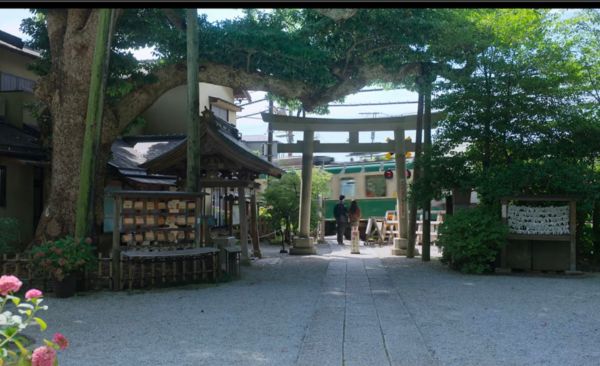
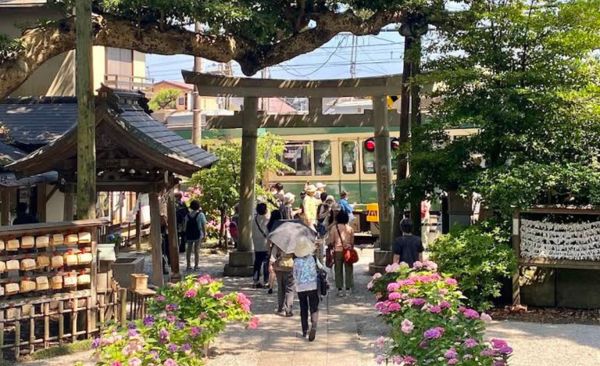
Well after parting ways, Mu Hee realized that she took Ho-jin’s phone and the scene before they walked together was filmed at Goryo Shrine (no longer at Enoshima, but along Enoden Line).
This one is also near the Hasedera Temple which you can visit if you’re taking your time (trust me you can’t do the Hasedera temple on the same day if you want to visit all the shooting locations).
6. Katase Bridge
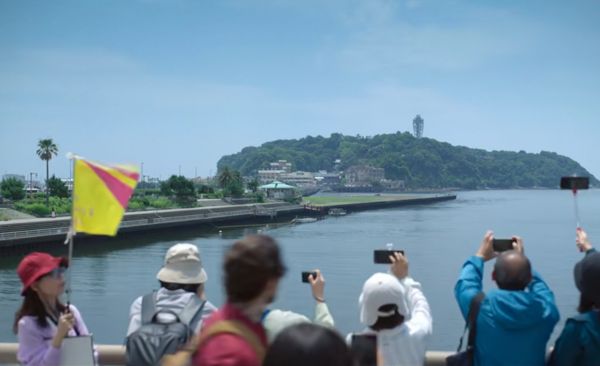
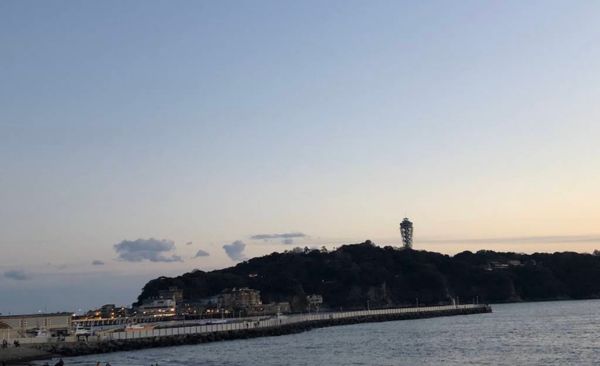
This scene where Shin Ji Seon was part of the tour group can be easily reenacted when you walk along Katase Bridge.
7. Nakamuraya Honten Teahouse
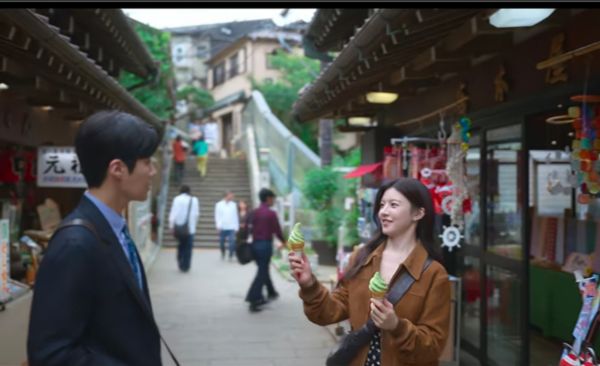
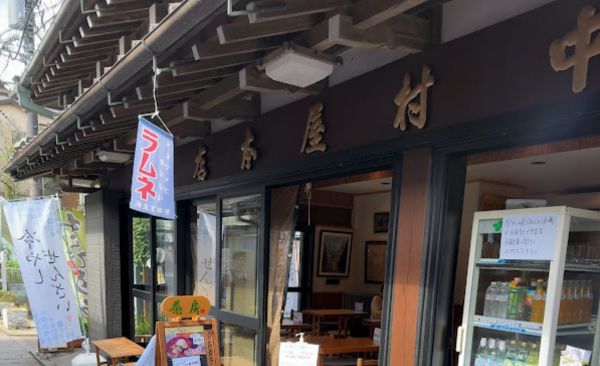
This was the scene where they seem to be a souvenir shop then she mentioned to Ho Jin that he can search for her on the internet (since she’s an actress).
Despite what you may read from other articles this is not at Enoshima Benzaiten Shopping Street, this location is actually at Nakamuraya Honten House which you may find when you explore the area furhter up from the Enoshima Candle area.
8. 片瀬漁港白灯台 or Katase Fishing Port White Lighthouse
Now you might be looking forward to this one since it has the Mt. Fuji view and the Enoshima view in one place.
You might need to use the Japanese location name to find it on Google Map
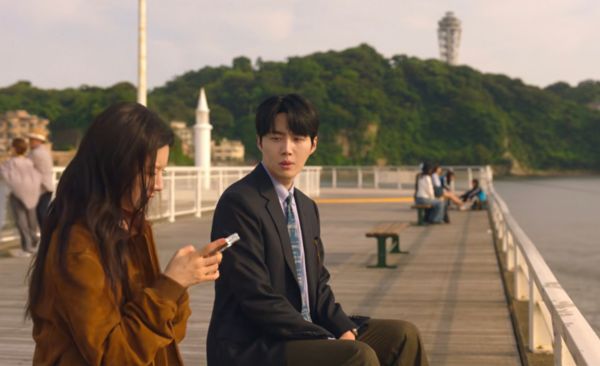
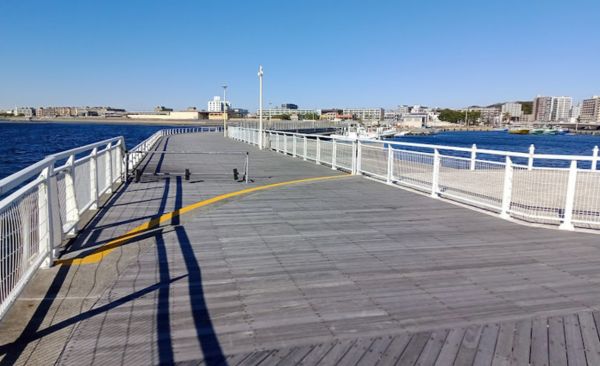
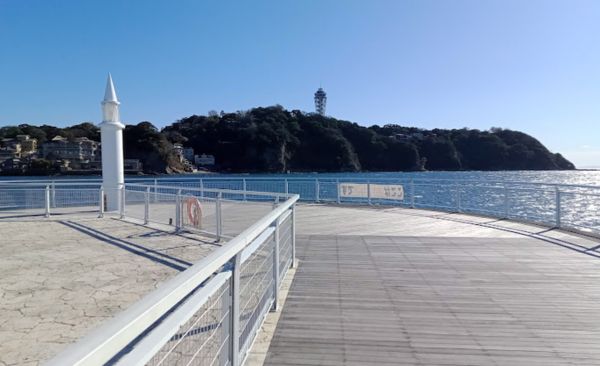
It took me a while to finally pinpoint this one, but the hidden clue was that white lighthouse on their background!
Not sure there really are benches there now (could be props) but this is exactly that spot. There’s one thing though, don’t get too hopeful there would be a big Mt. Fuji view from here, that’s just a result of their good cameras and angles.
9. Tanaka Barbershop
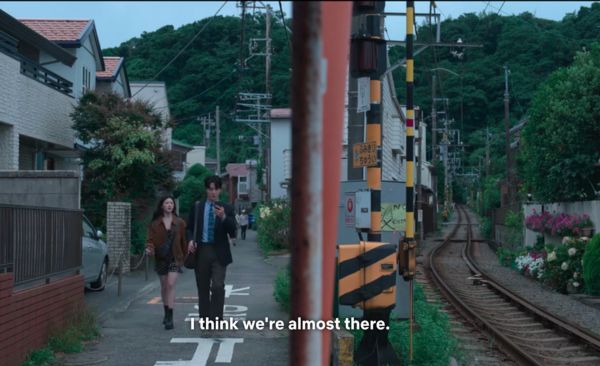
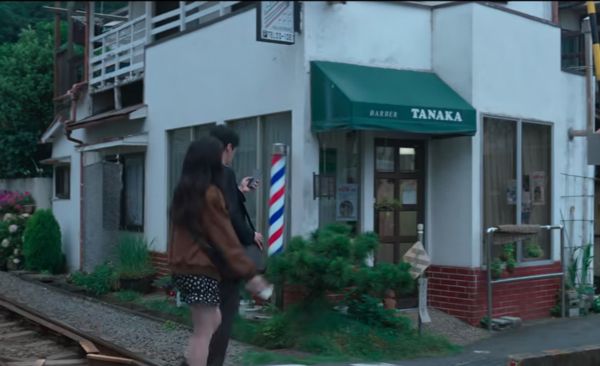
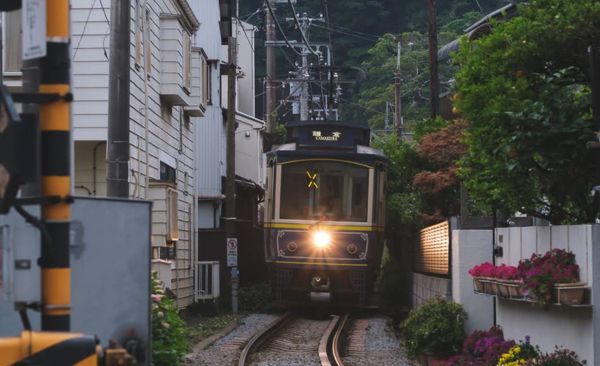
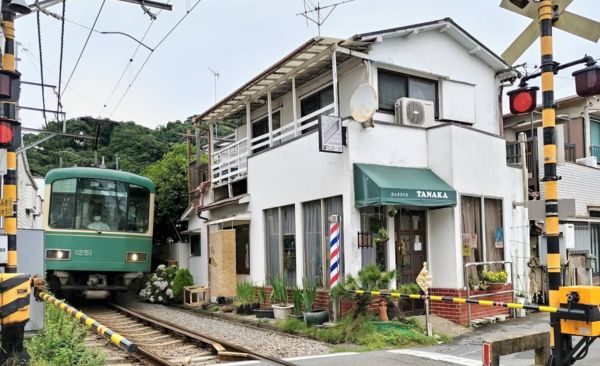
This one is just a few minutes walk away from Goryo Shrine. Imagine reenacting the dramatic parting with the train between them!
10. Enoshima Candle
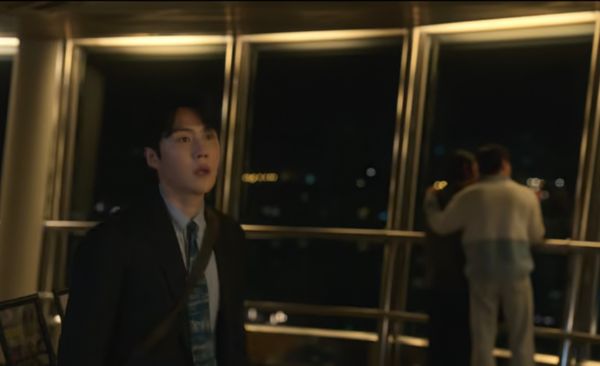
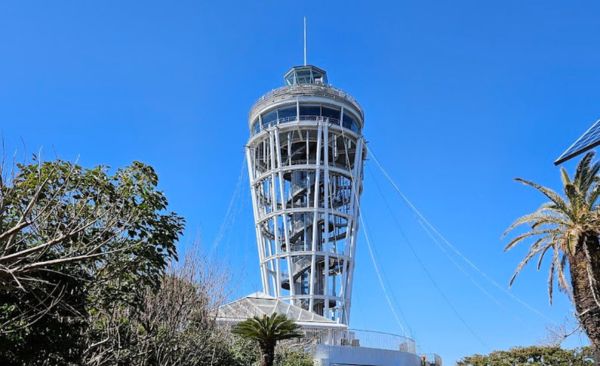
Would’t it be nice to be Jin Seon waiting for Ho Jin at night? Now Enoshima Candle has an entrance fee which I’ll be discussing below.
Enoshima Sea Candle & Samuel Cocking Garden Tickets
If you’re planning to visit Enoshima Sea Candle, it’s good to know how tickets and fees work, especially if you want to combine it with other spots on the island like Samuel Cocking Garden and Enoshima Escar.
Enoshima Samuel Cocking Garden is free to enter during the day if no events are happening. However, if you visit after 5:00 PM during an event, there is a fee:
- Adults: ¥500
- Children: ¥250
Enoshima Sea Candle, which is inside the garden, always requires an admission fee:
- Adults: ¥800
- Children: ¥400
There are discounted rates for groups (20+ people) and for visitors with disability certificates, which you can confirm at the reception desk.
Set Tickets & Online Options
For convenience and savings, consider these great value tickets, especially if you want to explore multiple attractions:
- Enoshima Sea Candle Set Ticket: includes Escar + Cocking Garden + Sea Candle. Adults: ¥1,100 / Children: ¥550.
- Enoshima 1-Day Ticket: covers Escar + Cocking Garden + Sea Candle + Iwaya Cave. Adults: ¥1,550 / Children: ¥700.
- Enoshima Iwaya Sea Candle Set Ticket: Cocking Garden + Sea Candle + Iwaya Cave. Adults: ¥1,110 / Children: ¥500.
💡 Pro Tip: If visiting after 5:00 PM during an event, make sure to get the “+Night” ticket which includes the evening event fee.
Where to Buy Tickets
- On-site: Tickets are available at each facility entrance (Cocking Garden, Sea Candle, Escar platforms) and at local tourist information centers. Payment options include cash, credit cards, transportation IC cards, and PayPay.
- Online: Recommended to skip the line! Platforms like Asoview or EMot sell the Sea Candle Set Ticket, Enoshima 1-Day, and Area Passport tickets.
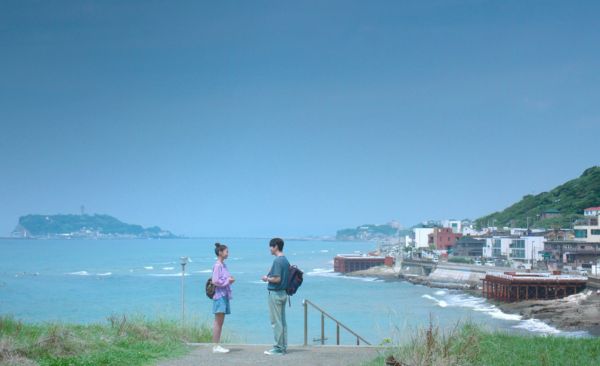
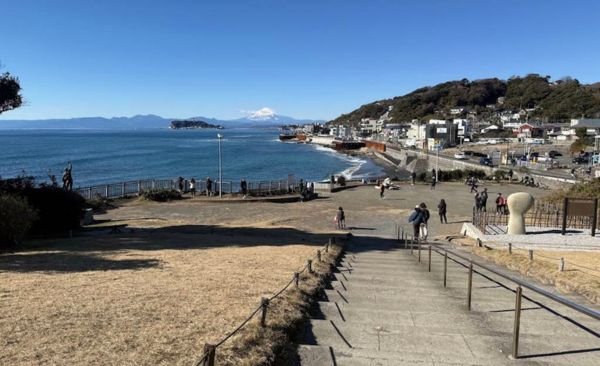
11. Cape Inamuragasaki (This was on Episode 2!)
This was the place where Ho-jin and Jin-Seon parted ways and where she gave him an “omamori” telling him that if they see each other again then they are meant to be together.
Why Visiting the Locations Will Be Low Effort but High Satisfaction
This wouldn’t be a pilgrimage where you’re racing against time or bouncing between far-flung locations. Everything flows naturally. You walk. You pause. You ride a train. You walk some more.
The excitement comes in waves, not all at once. You’ll be chatting, half-distracted, and then suddenly someone stops mid-sentence because something in the corner of their eye clicks.
That moment—when recognition hits—is pure serotonin.
Even if you miss an exact angle or realize the spot is one street over, it doesn’t ruin anything. It adds to it. The day becomes about discovery, not precision.
This makes it an absolutely perfect day tour for anyone wanting to explore Enoshima and Kamakura, not just fans of the series. Scenic streets, cozy cafes, ocean views, and just enough adventure to make you feel like the main character.
Suggested Order of Visiting (from Kamakura)
1. Tanaka Barbershop ( near Hase Station)
2. Goryo Shrine (3 minutes walk from Tanaka Barbershop)
3. Gokurakuji Station
4. Cape Cnamuragasaki
5. 片瀬漁港白灯台 or Katase Fishing Port White Lighthouse
6. Katase Bridge
7. Street Near Enoshima 155 Cafe
8. Enoshima Shrine Hetsumiya
9. Nakamuraya Honten Teahouse
10. Asahi Honten
11. Enoshima Candle (at night)
Other places you can visit/checkout while on the day tour:
1. Yama-Futatsu (Twin Mounts) – this one is a few steps away from Nakamuraya Honten Teahouse
2. Iwaya Caves – I would only add Iwaya caves if you’re spending a full day at Enoshima. But if you want to add Iwaya Caves on your day tour, make sure you’re done with Katase Fishing Port white lighthouse by lunch and ready for long walks and mountains of stairs.
You have to take the ferry at (Enoshima Ferryboat “Bentenmaru” Benten Bridge Pier). This is a long walk (with lots and lots of stairs going to Nakamuraya Honten Teahouse and Asahi Honten then you can go to the Enoshima Candle, Enoshima Shrine Hetsumiya and Street Near Enoshima 155 Cafe.)
Enoden 1-Day Pass “Noriorikun”: Your Key to the Adventure
Now, let’s talk about the Enoden 1-Day Pass, also known as “Noriorikun.”
Here’s the deal: if you want to fully own your Enoshima–Kamakura day trip, the Noriorikun 1-Day Pass is your new best friend. Think of it like the golden ticket that lets you ride the Enoden train as much as you want, all day long—hop on, hop off, explore, snack, repeat. It’s basically a “freedom in a ticket” kind of vibe.
But wait, it doesn’t stop at just unlimited train rides. With Noriorikun, you get a little bonus magic sprinkled into your day. Loads of local spots along the line—like Enoshima Sea Candle, Enoshima Aquarium, Hasedera Temple, and even restaurants or small lodging spots—offer special discounts or perks just for pass holders. Imagine riding the train, stopping wherever you feel like, and getting tiny little wins along the way. Instant dopamine.
The passes are ridiculously easy to grab: 800 yen for adults, 400 yen for kids, available at all Enoden station vending machines. Super straightforward, no fuss. Just make sure you use it on the day of issue because it doesn’t roll over, and yes, it’s one ticket, one day, unlimited exploration.
Basically, if your goal is to make your Kamakura–Enoshima pilgrimage effortless, flexible, and fun, Noriorikun is the ticket that makes it happen. No schedules, no stress, just pure wanderlust energy.
It’s also a great deal for its price especially when you plan to visit all the shooting locations and going back!
In short: Noriorikun can turn your casual day out into a fully optimized, hop-on-hop-off adventure, complete with fun discounts and the freedom to explore everything at your own pace.
Final Thoughts: Don’t Overplan, Just Go
This is not a pilgrimage that rewards overthinking.
Watch Episode 1. Let it sink in. Screenshot the scenes that stick with you. Grab the Enoden 1-Day Pass. Wander.
You don’t need to catch everything. You don’t need to be exact. Can This Love Be Translated? didn’t demand your attention—it earned it.
And somehow, that first episode did the same with your feet.
Honestly?
That’s kind of iconic.
And if you just want a fun, light, full-day trip exploring Enoshima and Kamakura while feeling like you’re part of a drama, this is it.